When to go
Earlier hours are usually cooler and may suit photography, but cloud can hide Mayon at any time. Carry sun and rain protection in every season.
Plan your visit
Build flexibility into the day. Access, charges, transport and volcanic restrictions can change faster than a printed itinerary.
Confirm today's opening access and charges, review local weather, and read the latest PHIVOLCS Mayon bulletin and local-authority instructions.
Earlier hours are usually cooler and may suit photography, but cloud can hide Mayon at any time. Carry sun and rain protection in every season.
Allow 60–90 minutes for the ruins and interpretation. Add time for the adjacent museum if open, or two to three hours for a separately arranged ATV experience.
Park entry charges and activity prices may apply, and entry is normally paid at the gate rather than booked ahead. Because amounts and inclusions change, verify at the entrance or through a current Daraga source before relying on a budget.
Water, breathable clothing, a hat, rain cover and footwear comfortable on uneven ground. Protect cameras from sudden rain and dust.
Admission is settled at the gate on the day itself. Bring small notes, ask what the ticket covers, and keep the receipt until you leave the grounds.
All-terrain-vehicle rides are run by separate businesses, not by the park. Compare route length, helmets, briefing and weather policy on the spot before paying.
Hotels, licensed operators and Daraga tourism channels can arrange guiding and transport. Ask for the operator's name and exactly what the quoted price includes.
Treat third-party pages claiming to sell "official Cagsawa tickets" with caution. Confirm inclusions and refund terms before paying any deposit online.
Read the booking answers →Getting there
Cagsawa is in Daraga, not Legazpi City, though Legazpi is the most common nearby transport base.
Open map searchUse “Cagsawa Ruins, Barangay Busay, Daraga” as the destination and agree on the fare or app pickup point. Ask about the return trip if staying late.
Jeepney routes on the Daraga–Camalig corridor can change. Ask the driver for the current Cagsawa drop-off and confirm the local connection into the park.
Visitor lots are available around the park area. Follow current road signs and attendants; capacity, access patterns and parking charges can change.
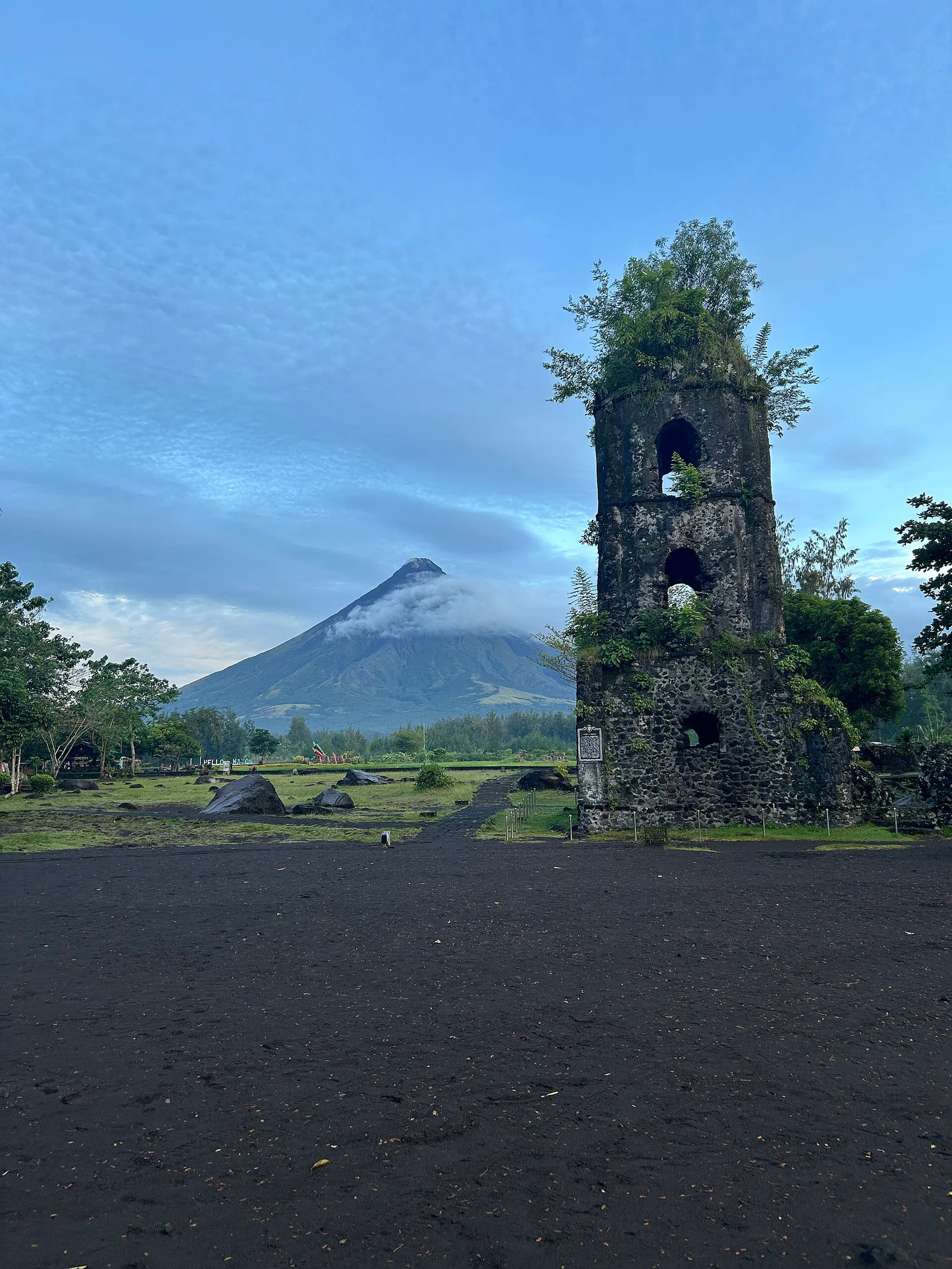
Active-volcano landscape
Mayon is an active volcano. Check PHIVOLCS bulletins, obey local closures and stay out of declared danger zones. Heavy rain can also create lahar hazards in channels and drainage paths.
Read current Mayon bulletins ↗Compare operators, route permissions, equipment, insurance, briefing quality and weather policy. Never treat a tour booking as permission to cross a restricted area.
At the ruins